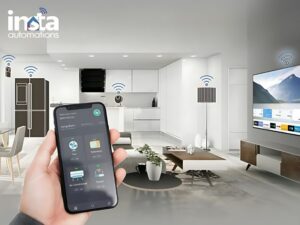
Smart Home vs Traditional Home: Understanding the Key Differences Before You Build or Upgrade
Building a new home or upgrading your existing one is an exciting journey. One of the biggest decisions today is whether to choose a traditional home or invest in smart home automation. Modern homeowners are looking for comfort, safety, energy savings, and better control over everyday living. At the same time, they want a home that matches their lifestyle today and stays valuable in the future.
A traditional home offers familiarity and simplicity, while a smart home combines technology with convenience to create a connected living experience. From controlling lights with your smartphone to monitoring your property from anywhere, smart living is becoming the preferred choice for families, professionals, and luxury homeowners. If you are planning a new home, you may also wonder should smart home automation be done before interior design or after construction. Understanding these differences will help you make a confident decision that supports your long-term lifestyle, comfort, and investment.
Smart Home vs Traditional Home Comparison: Features, Costs, Security, Comfort, and Long-Term Value
What Is a Smart Home and How Does It Differ from a Traditional Home?
A traditional home depends on manual operation. You switch lights on and off, adjust fans, lock doors, and manage appliances individually. While this approach has worked for decades, it often lacks flexibility and convenience. A smart home connects multiple devices through a secure network, allowing homeowners to control lighting, air conditioning, curtains, entertainment systems, door locks, and appliances from a smartphone, touch panel, or voice assistant. Daily routines become simple because devices work together automatically based on schedules or personal preferences.
Many homeowners searching for the best smart home ideas are looking beyond luxury. They want practical features such as automated lighting, motorized curtains, video doorbells, smart door locks, climate control, multi-room entertainment, and voice-controlled scenes that improve everyday living while increasing property value.
Smart Home Benefits: Convenience, Energy Efficiency, and Everyday Comfort
Technology should simplify life rather than complicate it. That is exactly why smart homes continue to grow in popularity.
One of the biggest advantages is convenience. Imagine waking up to curtains opening automatically, lights adjusting to natural daylight, and your preferred room temperature already set before you leave your bedroom. These small automations save time while creating a more comfortable lifestyle.
Another major benefit is understanding how smart homes save energy in daily life. Smart lighting switches off automatically when rooms are empty. Intelligent climate control maintains comfortable temperatures without wasting electricity. Smart scheduling ensures appliances operate only when needed, reducing unnecessary energy consumption. Real-time energy monitoring also helps homeowners identify areas where electricity usage can be optimized. Modern automation also improves accessibility for children, elderly family members, and individuals with mobility challenges by making every day controls simple and effortless.
Smart Home Security vs Traditional Security Systems: Which Offers Better Protection?
Home security has become one of the most important priorities for modern families.
Traditional security usually includes basic door locks, CCTV cameras, or alarm systems that require manual monitoring. While these solutions provide protection, they often lack instant communication and remote accessibility. Today’s smart home security systems offer a more intelligent approach. Smart cameras provide live video feeds, motion detection, instant mobile alerts, remote access, video doorbells, smart locks, visitor management, and automated emergency notifications. Homeowners can monitor their property even while travelling, providing greater confidence and peace of mind.
Advanced automation also allows multiple security devices to work together. If motion is detected unexpectedly, lights can turn on automatically, cameras begin recording immediately, and notifications reach your smartphone within seconds. This connected protection creates a stronger security experience than traditional standalone systems.
Smart Home Installation Cost vs Traditional Home Expenses: Which Saves More Over Time?
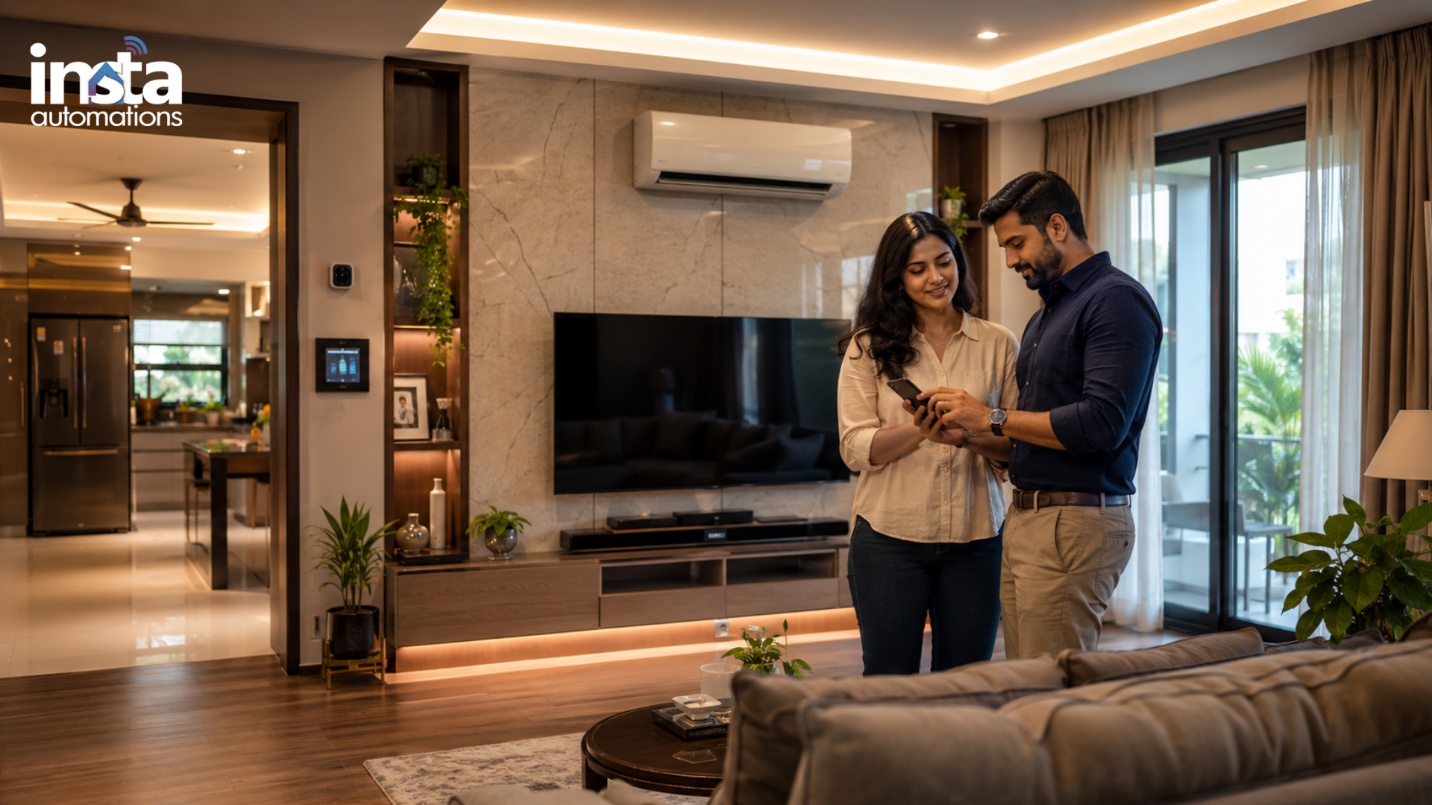
Many people believe smart homes are expensive. While the initial investment may be higher than traditional electrical systems, the long-term value often outweighs the upfront cost. Traditional homes usually require future upgrades as technology changes. Additional wiring, renovations, and repeated installations may increase expenses over time.
A well-planned smart home is designed with future expansion in mind. Features can be added gradually without replacing the entire infrastructure. Reduced electricity bills, improved appliance efficiency, enhanced security, and lower maintenance costs contribute to long-term savings.
For homeowners planning a premium residence, should smart home automation be done before interior design is one of the most important questions? The answer is yes. Planning automation before interior work allows hidden wiring, better device placement, cleaner finishes, and seamless integration with lighting, false ceilings, furniture, and overall interior aesthetics. Early planning also avoids expensive modifications later. Homeowners researching the best smart automations companies in Bangalore often prioritize experience, customization, technical support, product compatibility, and long-term service rather than selecting solutions based only on price.
Is a Smart Home the Future? Choosing the Right Home Based on Your Lifestyle and Budget
Every homeowner has different priorities. Some value simplicity, while others seek technology that adapts to their daily routine. If your goal is only basic living, a traditional home may still meet your needs. However, if you want enhanced comfort, intelligent security, better energy management, remote control, future-ready technology, and increased property value, a smart home becomes a practical long-term investment.
Today's automation solutions are flexible enough to fit apartments, villas, duplex homes, luxury residences, and renovation projects. Homeowners can start with essential automation features and gradually expand according to their lifestyle and budget. For families planning their dream home, choosing automation early creates a more connected, efficient, and enjoyable living experience for years to come.
Why Smart Homes Are Becoming the Preferred Choice for Modern, Secure, and Future-Ready Living
Choosing between a smart home and a traditional home is no longer just about technology. It is about creating a home that supports comfort, safety, efficiency, convenience, and long-term value. Smart living transforms everyday routines into effortless experiences while helping homeowners reduce energy consumption, strengthen home security, and prepare for future innovations. Whether you are building a new home or renovating an existing one, thoughtful automation planning delivers lasting benefits for every member of the family.
Insta Automation is India's Most Trusted Home Automation Company in Bangalore, delivering personalized, plug-and-play smart home solutions designed for modern Indian lifestyles. Backed by 10+ Years' Experience, Trusted by 500+ Homes Automated, 3000+ Devices Installed, and a 4.9/5 Customer Rating, the company combines precision, intelligence, clarity, and proven expertise to create luxury automation experiences that seamlessly integrate with your home's architecture and interior design. Every solution is customized to provide comfort, security, energy efficiency, and complete peace of mind.
Frequently Asked Questions
What is the difference between a smart home and a traditional home?
A traditional home relies on manual operation, while a smart home connects multiple devices that can be controlled through a smartphone, touch panel, or voice assistant for greater convenience and efficiency.
How smart home automations save energy?
Smart automation reduces unnecessary electricity usage by automatically controlling lighting, air conditioning, appliances, and power schedules based on occupancy and daily routines.
Should smart home automation be done before interior design?
Yes. Planning automation before interior design ensures concealed wiring, better device placement, cleaner aesthetics, and lower installation costs during construction.
What are the best smart home ideas for a modern home?
Popular ideas include smart lighting, automated curtains, climate control, smart door locks, video doorbells, home theatre automation, voice control, and energy monitoring systems.
Why are smart home security systems better than traditional security?
Smart security systems provide live monitoring, instant alerts, remote access, smart locks, motion detection, and integrated protection that can be managed from anywhere.
How do I choose the best smart automations companies in Bangalore?
Look for companies with proven experience, certified products, personalized solutions, strong customer support, successful installations, and positive customer reviews.
Get Expert Smart Home Automation Consultation in Bangalore
At Insta Automations, we specialize in delivering intelligent, secure, and customized smart home automation solutions designed to match your lifestyle. Whether you're building a new home or renovating an existing one, our experienced automation experts help you choose the right smart lighting, home security, entertainment, climate control, and energy-efficient automation systems for a seamless living experience.
📞 Phone: +91 7760535115📧 Email: contact@inautomations.com🌐 Website: inautomations.com