Designing a new home is exciting — every decision shapes how you will live for years to come. Today, homeowners are not just thinking about colors, furniture, or layouts. They are also thinking about convenience, security, energy efficiency, and future-ready living. This is where smart home automation enters the conversation.
A common question arises during planning:
“Should smart home automation be installed before interior design, or after?”
The short answer: Technology and design should be planned together — but automation decisions should start early. Let’s break it down clearly so you can make the smartest choice for your dream home.
Understanding Smart Home Automation: What Does It Involve?
Smart home automation is not just about controlling lights from your phone. It is a complete ecosystem of connected devices that work together to make your home intelligent, responsive, and secure.
Modern home automation systems can include:
- Smart lighting and scene control
- Motorized curtains and blinds
- Security systems and surveillance
- Smart door locks and video door phones
- Climate and AC automation
- Multi-room audio and home theatre integration
- Voice control and mobile app management
- Energy monitoring systems
These smart devices for homes communicate through a central system, allowing you to control multiple functions effortlessly.
Key benefits of smart homes include:
✔ Increased safety and real-time monitoring
✔ Greater comfort and convenience
✔ Improved energy efficiency
✔ Enhanced property value
✔ Personalized living experiences
When designed properly, technology becomes invisible — you experience the comfort without seeing the complexity.
The Importance of Early Planning: Why Timing Matters in Smart Home Automation
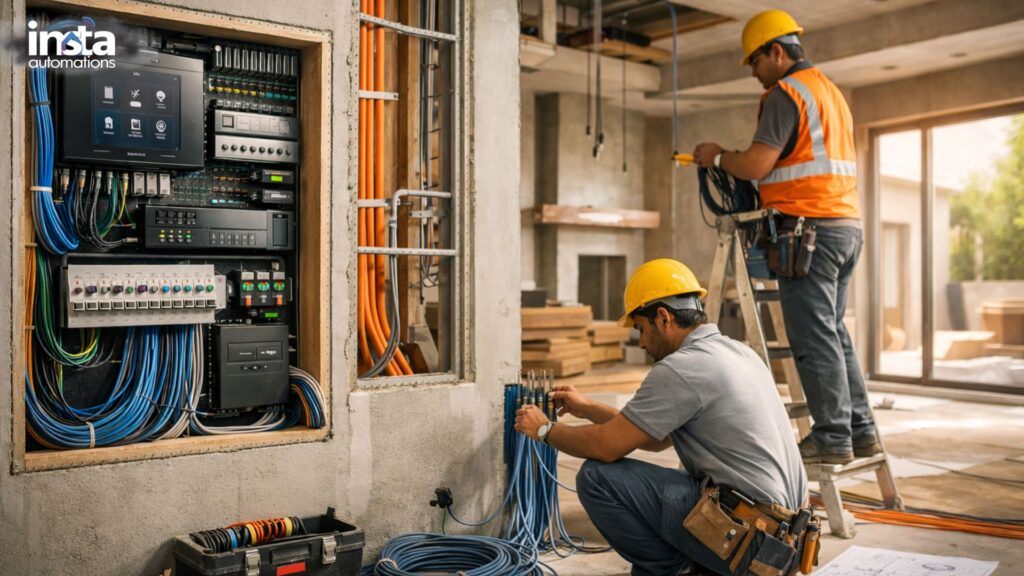
Timing plays a crucial role in successful smart home implementation. Planning automation during pre-construction or early building stages allows for clean installation and optimal performance.
Early planning enables:
- Proper electrical planning for automation
- Structured wiring for reliable connectivity
- Placement of control panels and sensors
- Dedicated spaces for networking equipment
- Seamless integration without visible cables
If automation is considered too late, installers may need to:
✖ Cut walls or ceilings
✖ Use surface wiring
✖ Compromise device placement
✖ Increase installation costs
✖ Limit system capabilities
Planning for smart homes from the beginning ensures your house is built around technology — not forced to accommodate it later.
Interior Design and Technology: How They Interact in Modern Homes
Interior design is no longer separate from technology. Today’s luxury homes blend aesthetics with functionality to create truly modern living spaces.
Smart interiors integrate technology in ways that enhance design rather than disrupt it.
Examples of design-tech integration include:
- Concealed speakers and hidden wiring
- Flush smart switches matching wall finishes
- Automated curtains aligned with window treatments
- Mood lighting designed with ceiling layouts
- Hidden projectors and motorized screens
- Minimalist control panels integrated into walls
Aesthetic considerations for home automation are essential. Poor planning can lead to bulky devices, mismatched finishes, or visible equipment that ruins the visual harmony of the space.
Great design makes technology disappear — while keeping control at your fingertips.
Smart Home Automation First vs. Interior Design First: Pros and Cons
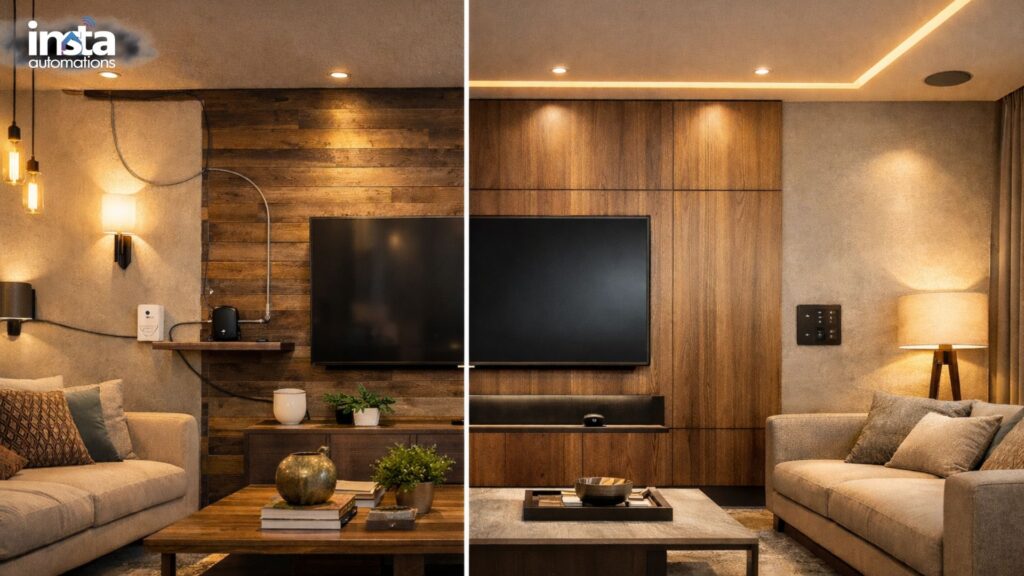
Option 1: Automation First
Pros
✔ Enables proper infrastructure planning
✔ Supports advanced features and scalability
✔ Reduces rework and construction changes
✔ Allows hidden wiring and clean installations
✔ Improves system reliability
Cons
✖ Requires early decision-making
✖ Needs coordination with architects and designers
Option 2: Interior Design First
Pros
✔ Allows focus on aesthetics initially
✔ Suitable for minimal automation needs
✔ Easier for homeowners unsure about technology
Cons
✖ Limits device placement options
✖ May require redesign or modifications later
✖ Can increase installation complexity and cost
✖ Risk of visible wiring or bulky equipment
So, What’s the Best Practice?
For new builds, experts strongly recommend:
👉 Plan smart home automation before or alongside interior design — not after.
This ensures both technology and aesthetics complement each other perfectly.
Collaboration Between Designers and Technologists: Achieving Seamless Results
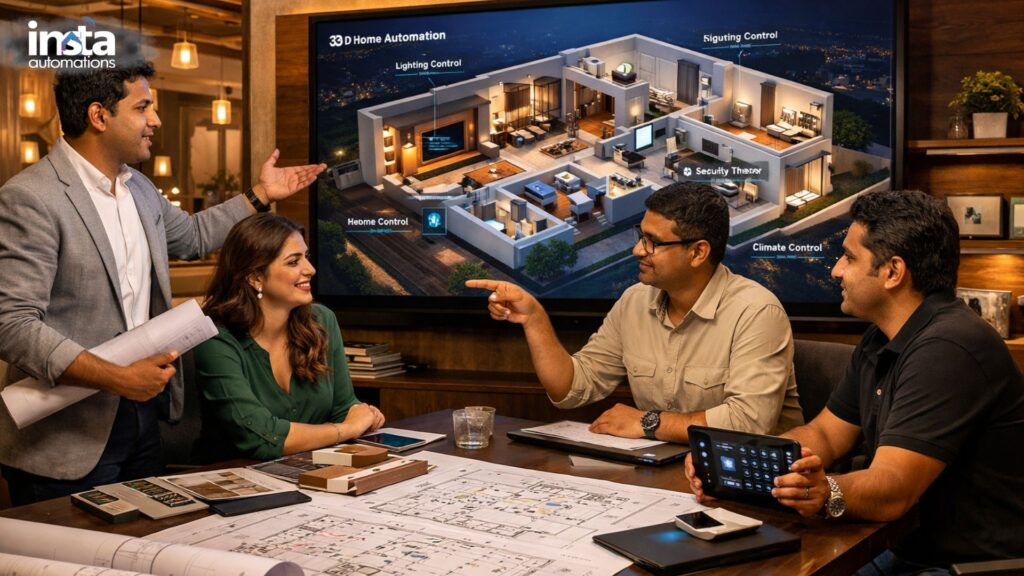
The best homes are created through teamwork.
A collaborative approach between:
- Architects
- Interior designers
- Electrical consultants
- System integrators
ensures a holistic home planning process.
When professionals work together from the start, they can:
✔ Optimize layouts for technology integration
✔ Align lighting plans with automation scenes
✔ Coordinate material choices with smart devices
✔ Prevent design conflicts during construction
✔ Deliver a unified, future-ready home
Instead of treating automation as an add-on, it becomes a core element of the design strategy.
Expert Tips for Integrating Smart Home Features into Your New Build or Renovation
If you are planning a new home, these expert recommendations will help you future-proof your investment.
1. Define Your Lifestyle Needs First
Think about how you live daily — security, entertainment, comfort, or energy savings.
2. Plan Strong Network Infrastructure
Reliable Wi-Fi and wired connections are the backbone of any smart home.
3. Choose Scalable Systems
Technology evolves quickly. Select solutions that can expand over time.
4. Coordinate Lighting and Automation Plans
Lighting design and automation scenes should be developed together.
5. Allocate Space for Equipment
Networking racks, control hubs, and power backup systems need proper placement.
6. Prioritize Security from the Start
Include surveillance, sensors, and access control during construction.
7. Keep Design Minimal and Clean
Hidden installations preserve aesthetics while delivering high functionality.
Conclusion: Making the Right Choice — Prioritizing Smart Home Automation or Interior Design in Your Project Timeline
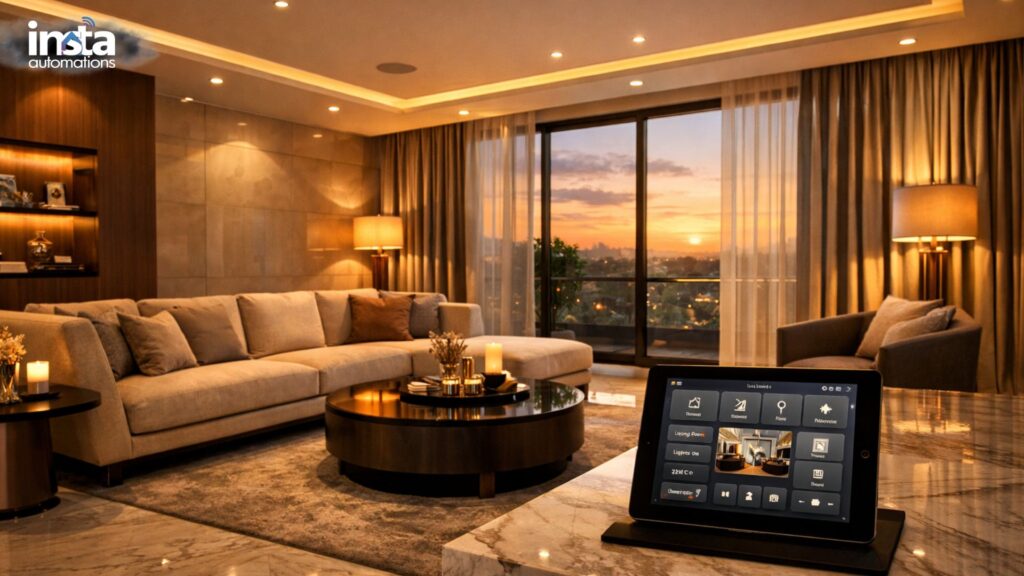
When building a new home, smart home automation should not be an afterthought. It should be part of the core planning process.
The ideal approach is not “automation first” or “design first.” It is planning both together — with automation decisions made early.
By aligning technology with architecture and interiors from the beginning, you achieve:
✔ A cleaner installation
✔ Better performance
✔ Greater design flexibility
✔ Lower long-term costs
✔ A truly future-ready home
Your dream home should not only look beautiful — it should also think, respond, and adapt to your lifestyle.
If you are planning a new build or renovation, consulting experienced smart home professionals early can make the entire process smoother, smarter, and far more rewarding.