Smart Home Control Systems Explained: How Smart Home Hubs Make Home Automation Simple
Smart home technology has moved beyond simply switching lights on and off with a mobile phone. Today, homeowners can connect smart home automation, security systems, residential networking, lighting, entertainment, access control and other connected devices into one coordinated environment.
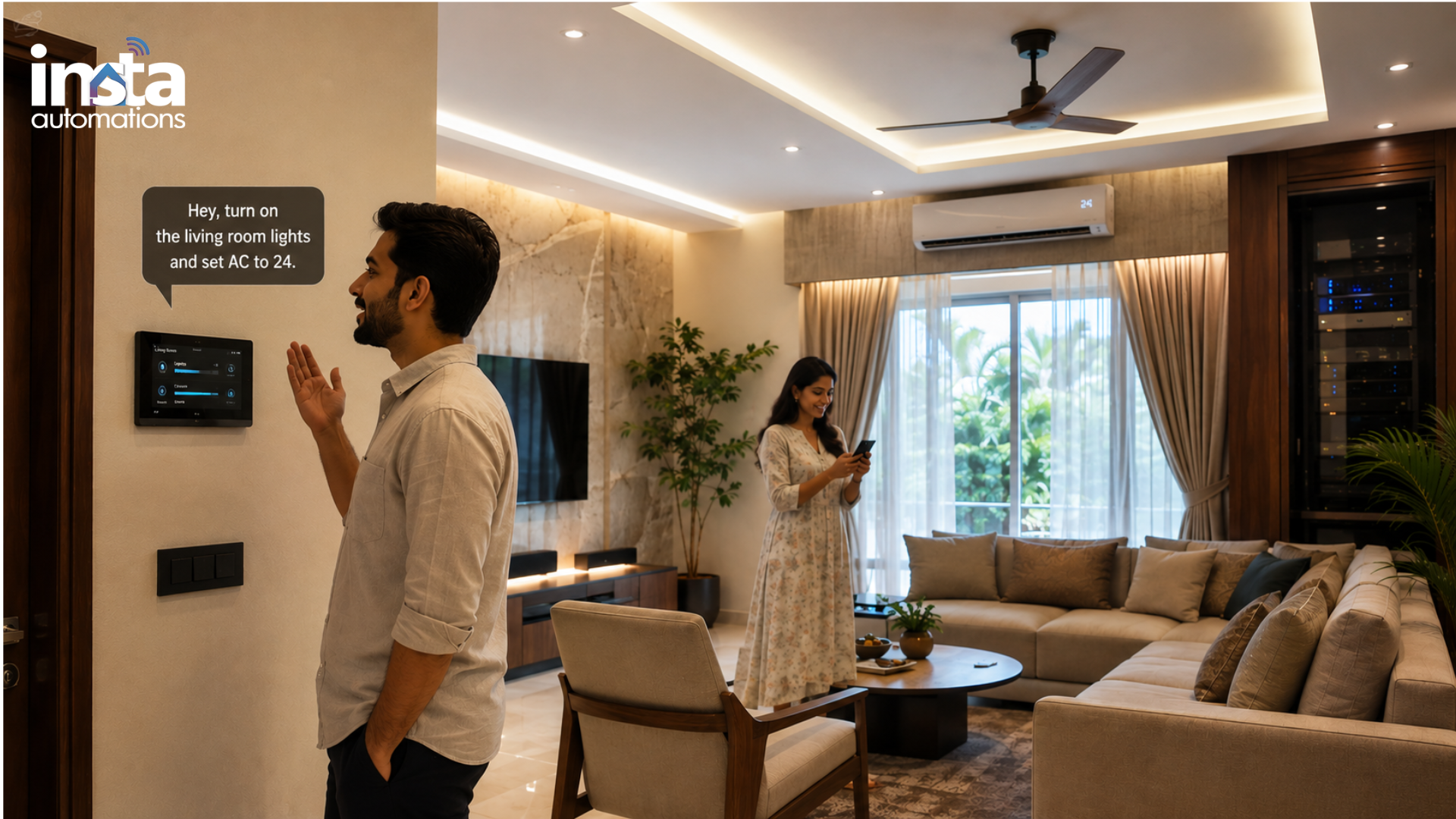
At the centre of many of these connected homes is a smart home control system. Depending on the technology used, a hub or controller can help different devices communicate and allow homeowners to manage them through a smartphone, tablet, touch panel, voice assistant or other control interface.
However, choosing a smart home hub should not be based only on the number of features advertised. Compatibility, security, network reliability, automation capabilities, scalability and long-term support are equally important.
For homeowners planning an apartment, villa or independent house, understanding these factors can make the buying decision much easier.
Smart Home Control System Buying Guide: How to Choose the Right Hub for Your Home
1. What Is a Smart Home Control System and How Does It Work?
A smart home control system connects compatible devices and provides a central way to monitor, control or automate them. The exact architecture depends on the products, communication protocols and ecosystem selected.
For example, a homeowner could create a “Good Night” scene that turns off selected lights, closes motorized curtains, adjusts connected appliances and activates security settings with a single command.
A complete smart home solution can bring together:
- Smart home automation for everyday routines
- Smart home security systems for monitoring and protection
- Smart residential networking for reliable device connectivity
- Smart home lighting for automated and personalized illumination
- Apartment and villa security solutions for access and surveillance
- Motorized curtains and blinds
- Home theatre and entertainment systems
- Mobile and remote control
- Sensors and automated triggers
The objective is not to automate everything unnecessarily. Good automation should make the home more convenient, secure and easier to manage.
2. Smart Home Hub vs Smart Home Controller: What’s the Difference?
The terms smart home hub and smart home controller are often used interchangeably, although their roles can differ depending on the platform.
A hub commonly acts as a communication bridge between compatible devices, while a controller may provide broader automation and user-control functions. Some modern systems combine both capabilities.
| Feature | Smart Home Hub | Smart Home Controller |
| Primary role | Connects compatible devices | Controls and coordinates devices |
| Device integration | Depends on supported ecosystem | Often supports broader integration |
| Automation | Basic to advanced, depending on platform | Often designed for advanced automation |
| Control methods | Usually app-based | App, touch panel, voice, remote or multiple interfaces |
| Suitable for | Smaller or moderate systems | More integrated homes and larger projects |
The important consideration is not the terminology. Check what the system actually supports, which devices it can integrate and how it can grow with your home.
3. Key Features to Look for in a Smart Home Automation Hub
A smart home hub should be evaluated as part of the entire automation ecosystem rather than as an isolated product.
Device Compatibility
Verify compatibility with existing and planned devices, including lighting, security, networking, climate control and entertainment equipment.
Look for support for scenes, schedules, triggers and routines. For example, lighting could respond to occupancy, time or a specific activity.
Smart Home Security Integration
If security is important, consider whether the system can coordinate compatible cameras, sensors, smart locks, alarms and access-control devices.
Reliable Residential Networking
Smart devices depend on communication infrastructure. A well-designed residential network can improve connectivity and provide a stronger foundation for connected-home technology.
A suitable system can potentially coordinate lighting scenes, dimming, schedules and occupancy-based automation, depending on compatible equipment.
Check how user accounts, device access, software updates and network security are managed. Avoid choosing a system solely because it has attractive automation features.
Future Scalability
Consider whether additional rooms, security devices, lighting circuits and automation features can be added later.
4. How to Choose a Smart Home Hub for Your Home and Devices
The right hub depends on the type of property and the homeowner’s requirements. A compact apartment may need a different solution from a multi-floor villa with extensive security and automation requirements.
Before purchasing, consider:
- Property type: Apartment, villa or independent home?
- Current devices: What equipment is already installed?
- Automation goals: Which daily activities should be automated?
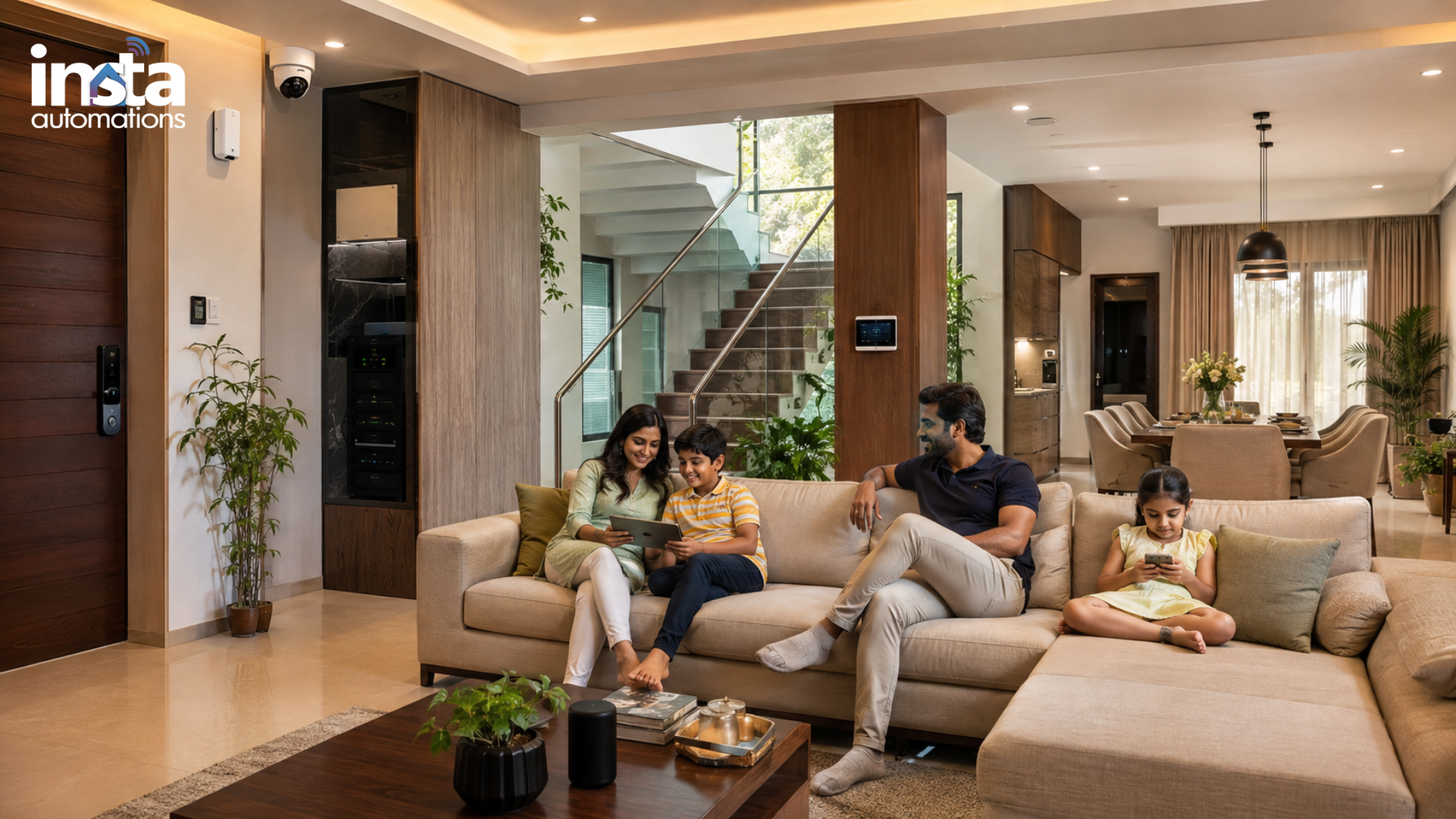
- Security requirements: Do you need cameras, sensors, access control or smart locks?
- Networking: Can your residential network support the connected devices?
- Lighting: Do you want centralized or scene-based lighting control?
- Future expansion: Will you add more devices later?
- Support: Who will configure, maintain and troubleshoot the system?
| Buying Factor | What to Evaluate |
| Compatibility | Existing and future devices |
| Automation | Scenes, schedules and triggers |
| Security | Cameras, sensors, locks and access |
| Networking | Wi-Fi, wired infrastructure and connectivity |
| Lighting | Dimming, scenes and automated control |
| Scalability | Additional rooms and devices |
| Support | Installation, configuration and maintenance |
For an apartment or villa, taking a whole-home approach is generally more useful than selecting individual smart devices without considering how they will work together.
5. Smart Home Control System Benefits, Compatibility, Security and Future Scalability
A properly planned smart home control system can provide benefits across several areas of the property.
Convenience
Centralized control can reduce the need to operate multiple individual devices and applications.
Lighting scenes can be designed for activities such as Morning, Work, Relax, Entertain and Good Night.
Better Security Management
A connected security solution can bring compatible cameras, sensors, smart locks and access-control devices into a coordinated environment.
Smart residential networking provides the communication foundation required by many connected-home devices.
Different properties require different security approaches. Apartments may focus on entrance access, video doorbells and internal monitoring, while villas may require broader perimeter, gate, surveillance and access-control solutions.
Future-Ready Expansion
A scalable system can allow homeowners to add compatible lighting, security, networking and automation products as their requirements change.
The key is planning. Compatibility should be verified before installation rather than assumed.
Choosing the Best Smart Home Control System for a Smarter, Connected Home
There is no single smart home hub that is ideal for every property. The best choice depends on the home’s size, technology requirements, security needs, existing infrastructure and future plans.
For a modern apartment or villa, homeowners should evaluate smart home automation, smart security systems, residential networking, smart lighting and property-specific security solutions as connected parts of one overall plan.
A neutral buying approach starts with understanding what you actually want to automate, which devices need to communicate and how the system can evolve over time.
Insta Automations can help homeowners plan integrated smart home solutions based on their property’s requirements, lifestyle and desired level of automation. The goal should be simple: technology that works reliably in the background while making everyday living more comfortable, connected and secure.
Frequently Asked Questions
What is a smart home control system?
A smart home control system allows compatible connected devices to be monitored, controlled and automated through centralized interfaces such as mobile apps, touch panels, voice controls or other devices.
Do I need a smart home hub for automation?
Not necessarily. Some smart devices can operate independently. However, a suitable hub or controller can simplify integration and centralized automation when multiple compatible devices are involved.
Can smart home security be connected to a control system?
Yes, depending on compatibility. Cameras, sensors, smart locks, alarms and access-control devices can potentially be integrated into a broader smart home ecosystem.
Why is residential networking important for smart homes?
Smart home devices depend on reliable communication. A properly designed residential network can provide the connectivity required for multiple connected devices to operate effectively.
Can I automate lighting in an apartment or villa?
Yes. Compatible smart lighting systems can support features such as centralized control, dimming, scenes, schedules and automated triggers.