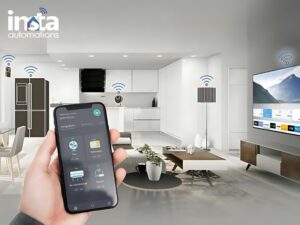
Managing water tanks manually can be time-consuming, especially in Bangalore homes where water supply schedules may vary. Forgetting to switch off the motor can cause tank overflow, water wastage and unnecessary electricity consumption. A water tank level controller offers a smarter way to manage daily water requirements without constantly checking the tank.
With smart home technology, homeowners can automate pump operation, monitor water levels and receive alerts on compatible mobile applications. Whether you live in an apartment, independent house or villa, water tank automation makes everyday water management more convenient, efficient and reliable.
What Is a Fully Automatic Water Level Controller?
A fully automatic water level controller is a device that monitors the water level in a tank and controls the connected pump according to predefined levels. Instead of manually operating the motor, the system automatically starts or stops it when required.
Depending on the model, advanced controllers may also offer Wi-Fi connectivity, mobile notifications, remote monitoring and dry-run protection.
Key benefits include:
- Automatic pump control: Starts and stops the motor based on water levels.
- Overflow prevention: Stops filling when the tank reaches its configured maximum level.
- Motor protection: Selected models detect low source-water levels and help prevent dry running.
- Remote monitoring: Wi-Fi-enabled systems allow users to check tank levels through a compatible app.
- Improved convenience: Reduces repeated tank inspections and manual switching.
How Does Water Tank Automation Work?
A smart controller uses sensors to detect the water level and communicates this information to a control unit. The controller then operates the pump based on the configured settings.
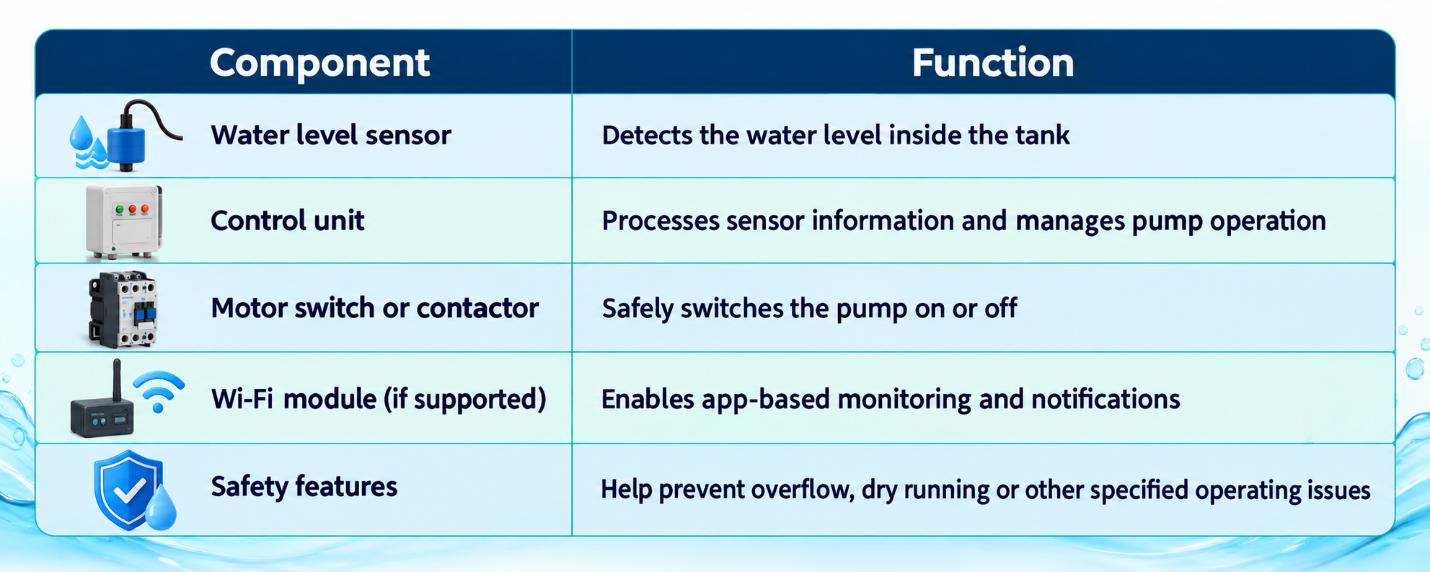
For example: When the overhead tank reaches its lower set level, the controller can start the pump if sufficient water is available in the sump. Once the overhead tank becomes full, the system switches off the pump automatically.
The exact operation depends on the selected model, sensor configuration and plumbing arrangement.
Automatic Water Tank Level Controller: Wi-Fi Options, Cost and Installation
Choosing the right automatic water level controller depends on your budget, tank location, pump capacity and preferred level of automation.
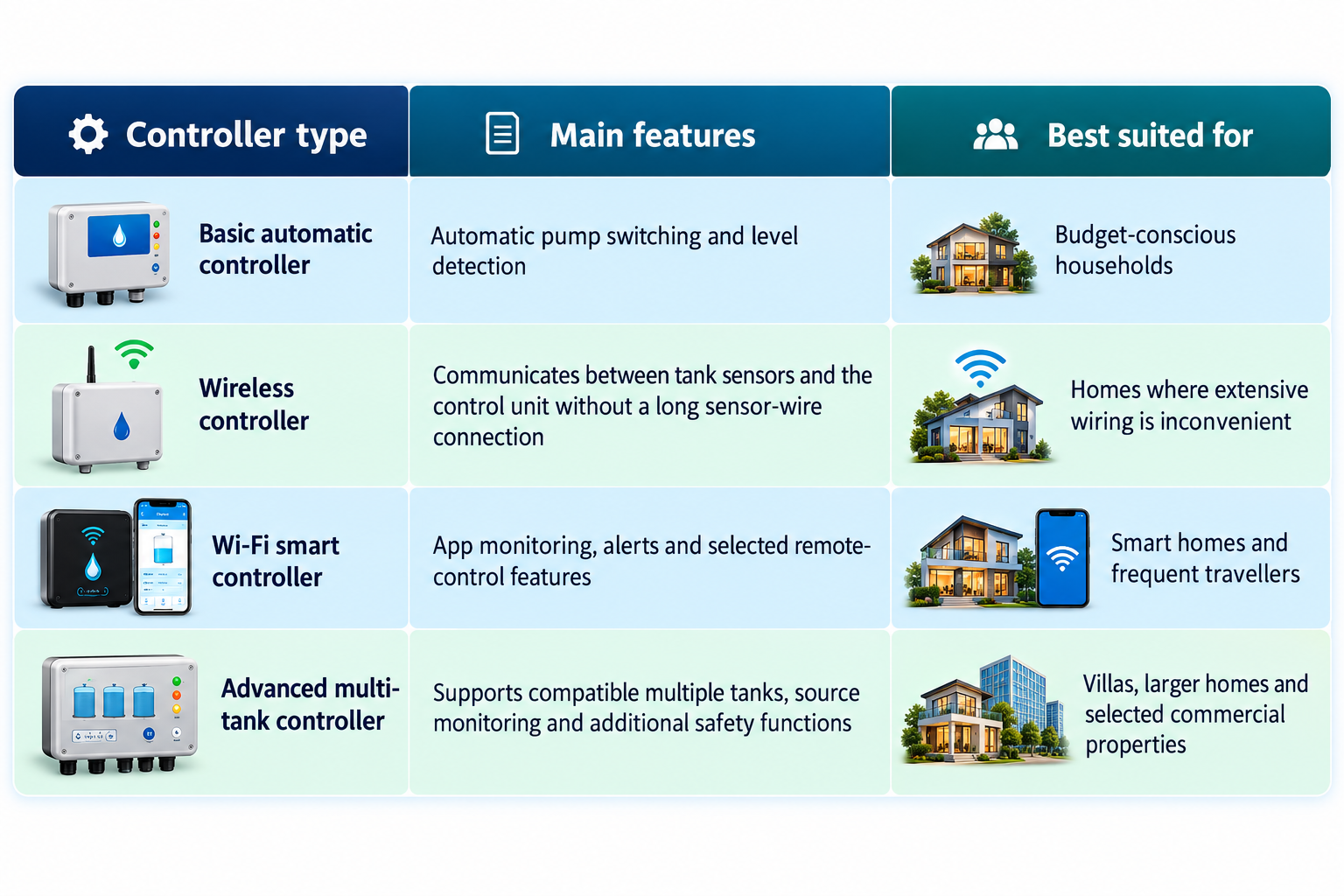
Types of Water Level Controllers
How Much Does a Water Tank Level Controller Cost in Bangalore?
The cost depends on the controller’s features, installation complexity, pump requirements and wiring distance. The following figures are indicative budgeting estimates, not a confirmed quotation.
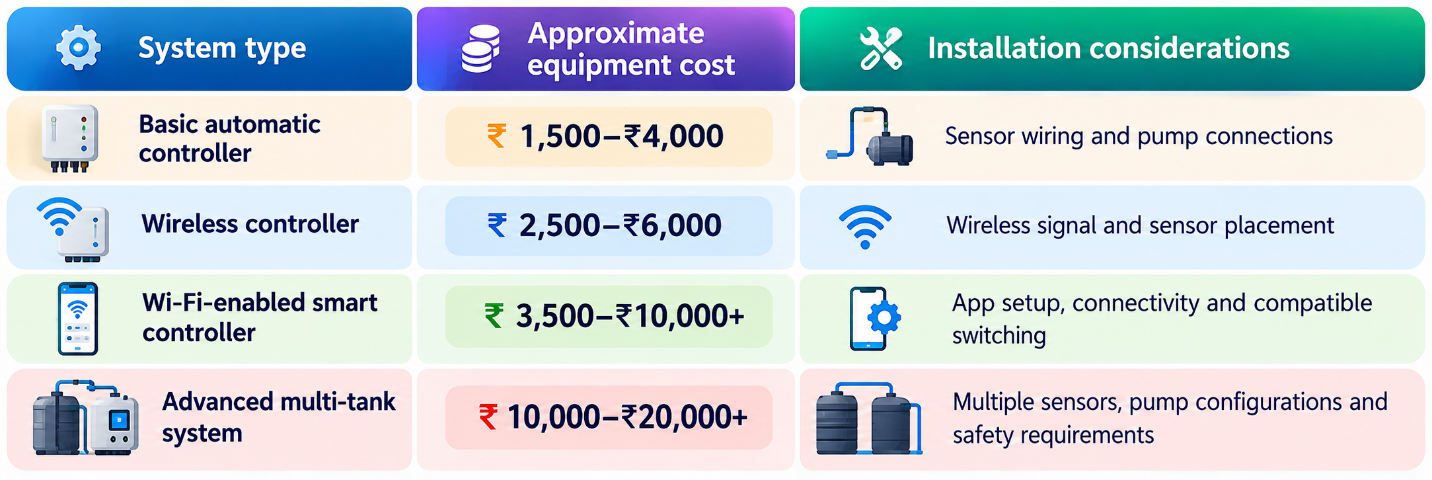
Actual prices can fall outside these ranges. Ask for a quotation covering equipment, installation, taxes, warranty and any additional electrical work.
Is Wi-Fi Connectivity Necessary?
Not every household needs Wi-Fi. A basic automatic controller can manage pump operation without internet access. However, a Wi-Fi-enabled system is useful when you want to monitor water levels while travelling or receive notifications when the tank is low or full.
Before purchasing, check whether the system supports:
- Real-time tank-level information or level alerts.
- Remote pump control through a compatible application.
- Automatic operation when the internet connection is unavailable.
- Dry-run protection and pump overload safeguards, where required.
- Your existing motor’s electrical rating and the number of tanks.
Water Level Controller Installation: What Should You Expect?
Professional installation helps ensure that sensors, wiring and pump controls work correctly. For Bangalore homes, the process generally includes:
- Site inspection: Identify the overhead tank, sump, water source and pump specifications.
- Controller selection: Choose wired, wireless or Wi-Fi-based equipment according to your requirements.
- Sensor installation: Position sensors correctly to detect the configured water levels.
- Electrical connection: Install compatible switching equipment and necessary protection devices.
- Testing: Verify automatic starting, stopping, overflow prevention and other supported safety features.
- User guidance: Explain manual override, app setup and basic maintenance.
Electrical connections should be handled by a qualified professional. Periodically inspect sensors and wiring, particularly where hard water, mineral deposits or outdoor exposure can affect components.
Why Choose Insta Automations for Smart Water Management?
Choosing the right installation partner matters as much as choosing the controller. Insta Automations helps homeowners explore smart home automation solutions suited to their property and everyday requirements.
When evaluating a water automation solution, consider the equipment’s compatibility, installation quality, safety features and after-installation support. A properly configured system can simplify water management while helping reduce avoidable overflow.
Upgrade to Smarter Water Tank Management
Ready to make your water management more convenient? Visit Insta Automations to explore smart home automation solutions and discuss your requirements with Insta Automations.
Ask about a suitable controller for your tank capacity, motor type, Wi-Fi requirements and installation needs before making your decision.
Conclusion
A fully automatic water level controller is a practical upgrade for modern homes. From basic motor automation to Wi-Fi-based monitoring, the right solution can reduce manual effort, help prevent tank overflow and improve control over daily water usage.
For the best results, choose a system that matches your plumbing, electrical setup and budget. With the right planning and professional installation, water tank automation can become a useful part of a smarter, more convenient home.
Frequently Asked Questions
What is the best water tank level controller for a home?
The best option depends on your budget and requirements. Basic controllers suit automatic pump switching, while Wi-Fi-enabled models are useful for app monitoring, alerts and supported remote-control functions.
Can I control my water tank motor using my mobile phone?
Yes. Compatible Wi-Fi controllers allow users to monitor water levels and may support remote pump operation through a mobile application. Features vary by model, and remote access generally requires internet connectivity.
Does an automatic water level controller prevent tank overflow?
A correctly installed controller can stop the pump when the tank reaches its configured full level. A suitable backup safety mechanism is also worth considering.
What is the difference between a wireless and Wi-Fi water level controller?
A wireless controller communicates between components without requiring a long signal cable. A Wi-Fi controller can offer internet-connected monitoring and remote access. Some products combine wireless sensors with Wi-Fi connectivity.
How much does water level controller installation cost in Bangalore?
Installation charges vary according to the controller, wiring distance, pump specifications and site conditions. Request an itemised quotation that separates equipment costs from installation and additional electrical work.