With electric vehicles becoming increasingly popular, installing a home charging station is a practical way to save time and make everyday charging convenient. Choosing the right home EV charger installation in Bangalore depends on your vehicle, parking space, electrical supply and charging requirements.
Whether you live in an independent house or a high-rise apartment, the right setup can provide safer charging, better energy management and long-term convenience. Insta Automations helps homeowners explore suitable EV charging solutions, from charger selection and electrical wiring to smart charging features.
1. EV Charger Installation Cost in Bangalore
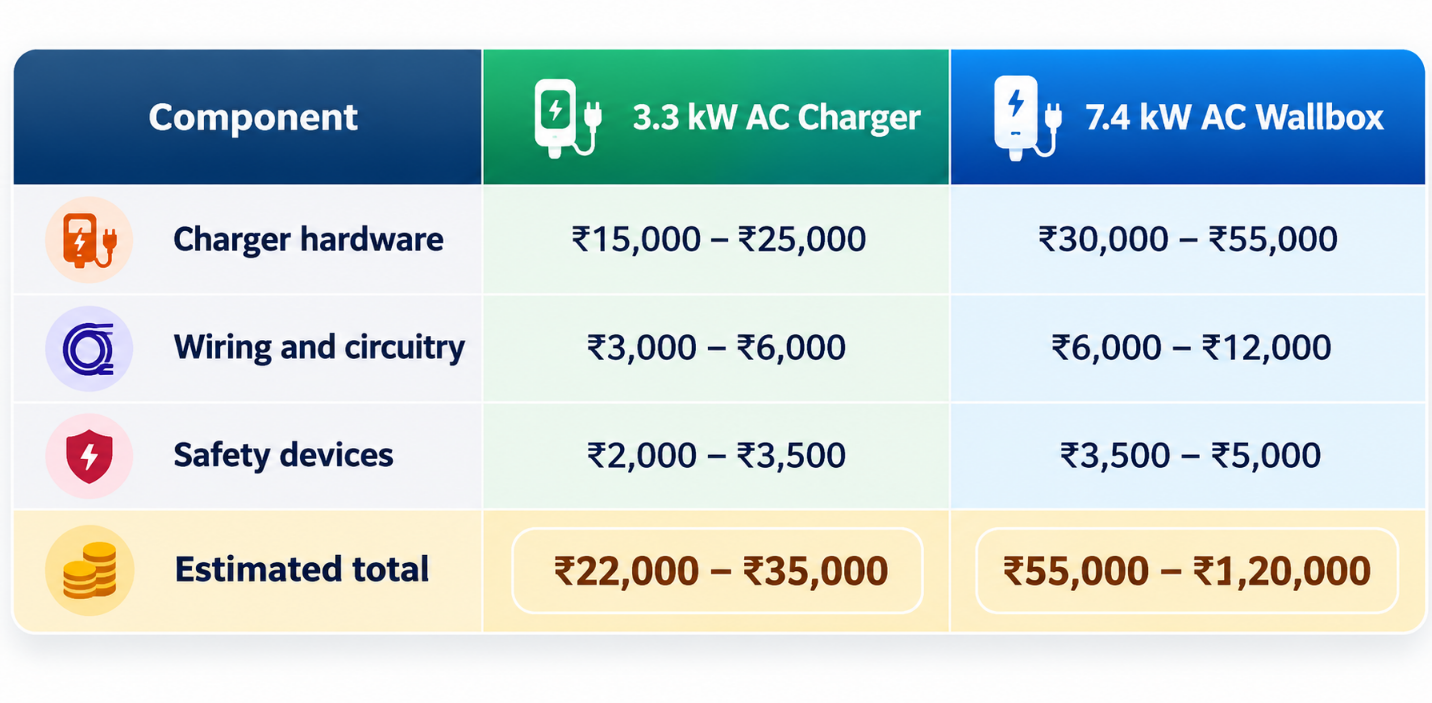
The cost of installing an EV charger for home Bangalore properties varies depending on the charger capacity, installation complexity and electrical infrastructure. A standard AC charger may be sufficient for overnight charging, while a higher-capacity smart wallbox can offer faster charging and additional controls.
The following prices are indicative estimates, not fixed quotations.
Estimated Home EV Charger Installation Cost
Actual costs depend on cable length, earthing requirements, installation labour and any additional electrical work.
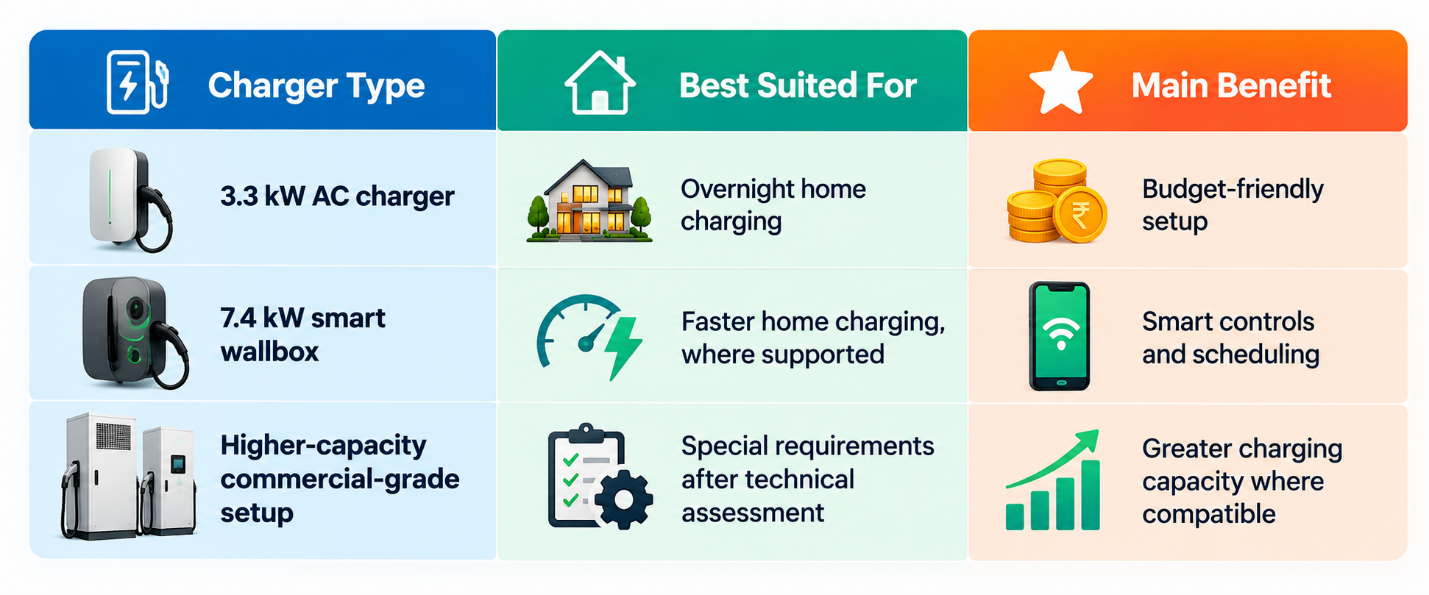
Which Charger Should You Choose?
Before purchasing, check your EV’s maximum AC charging capacity. A higher-rated charger will not necessarily charge every vehicle faster.
2. Wiring and Electrical Safety Requirements
Professional wiring is essential for safe and reliable home EV charger installation. EV chargers can draw substantial electrical power for several hours, so the circuit must be designed according to the charger rating and site conditions.
Important installation requirements include:
- Dedicated circuit: Run a properly rated circuit from the distribution board to the charging point.
- Correct cable sizing: Cable size depends on current, cable length, installation method, voltage drop and applicable electrical standards.
- Safety protection: Use suitable miniature circuit breakers (MCBs), residual-current protection (RCD/RCCB) and any DC leakage protection required by the charger manufacturer.
- Proper earthing: Verify the earthing system and protective connections before commissioning.
- Weather protection: Choose an appropriately rated enclosure if the charger is installed outdoors.
- Professional testing: Have a qualified electrician test the circuit, protection devices and charger before use.
Do You Need a BESCOM Load Enhancement?
Not every home charger requires a sanctioned-load upgrade. A 3.3 kW charger may work with an existing connection if sufficient capacity is available. A 7.4 kW charger may require a load assessment, particularly when other heavy appliances operate simultaneously.
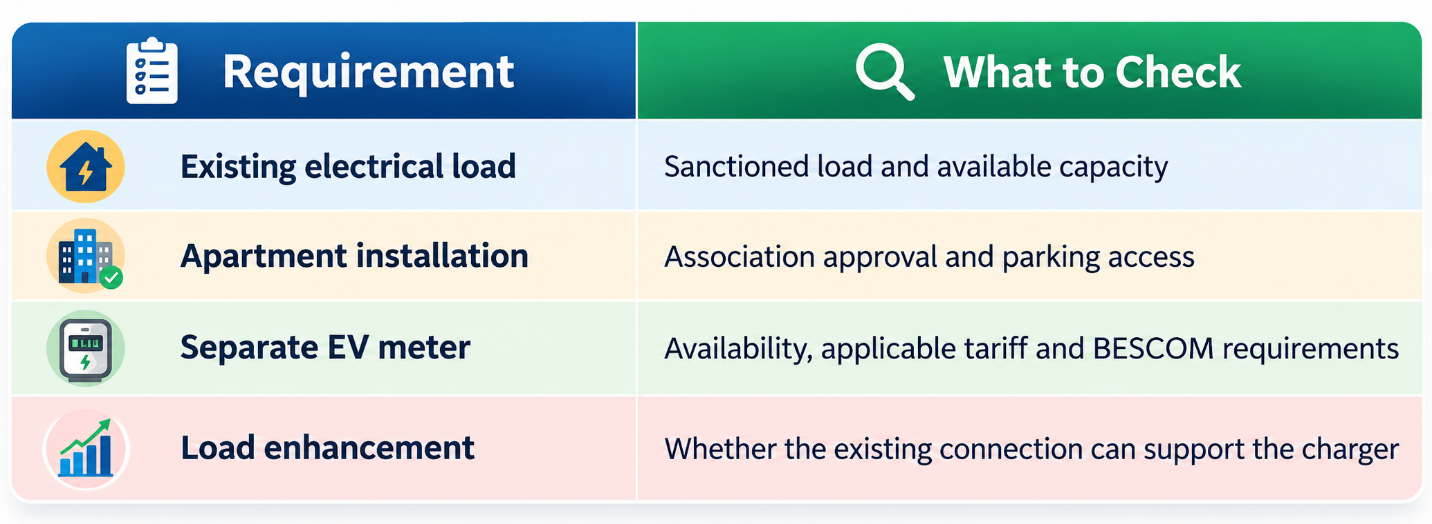
Confirm current BESCOM procedures, charges and applicable tariffs before installation. Avoid paying for an unnecessary load upgrade without a proper assessment.
3. Benefits of Smart EV Charging
Modern smart EV charging solutions offer more than basic charging. Depending on the model and available connectivity, they can help homeowners manage charging remotely and use electricity more efficiently.
Key features include:
- Scheduled charging: Set charging sessions during suitable off-peak periods, where applicable tariffs make this beneficial.
- Remote monitoring: Use a compatible mobile app to monitor charging status and energy consumption.
- Dynamic load balancing: Some chargers automatically adjust charging power to reduce the risk of exceeding the home’s available electrical capacity.
- Solar integration: Compatible systems can coordinate EV charging with rooftop solar generation.
- Charging history: Track energy usage and charging sessions through supported applications.
These features are particularly useful for households that want convenient charging without unnecessarily increasing their electricity consumption or electrical demand.
4. How to Choose the Right EV Charger Installer
Before finalising an installer, compare the technical proposal rather than choosing solely on price.
Look for a provider that offers:
- A site inspection and electrical-load assessment.
- A clear quotation covering equipment, wiring, protection and labour.
- Charger compatibility checks for your EV.
- Safe installation, testing and commissioning.
- Warranty information and after-installation support.
For apartment residents, confirm the cable route, parking permissions and metering arrangements before work begins.
Planning to install an EV charger at your home? Insta Automations can help you evaluate suitable charging options, electrical requirements and smart features for your property in Bangalore.
Visit https://inautomations.com/ to explore automation solutions and enquire about a home charging setup tailored to your requirements.
Conclusion
Choosing the right EV charger involves balancing charging speed, installation cost, electrical safety and convenience. A 3.3 kW charger may suit many overnight charging needs, while a compatible 7.4 kW smart wallbox can be a better choice for households seeking faster charging and advanced controls.
With proper wiring, suitable safety protection and an assessment of your existing electrical load, home EV charger installation can become a reliable long-term investment. Plan the installation around your vehicle and property requirements to get the best value from your EV charging system.
Frequently Asked Questions
What is the cost of installing an EV charger at home in Bangalore?
A basic 3.3 kW setup may cost approximately ₹22,000–₹35,000, while a 7.4 kW smart wallbox installation may cost ₹55,000–₹1,20,000. The final price depends on equipment, wiring and electrical upgrades.
Can I install an EV charger in a high-rise apartment?
Yes, subject to the building’s electrical infrastructure, parking arrangements, applicable permissions and safety requirements. Coordinate with the apartment association and a qualified installer before proceeding.
Is a separate BESCOM meter mandatory for home EV charging?
Not necessarily in every situation. Metering arrangements depend on the connection, applicable regulations and current utility procedures. Confirm the requirements with BESCOM before installation.
Is a 3.3 kW or 7.4 kW charger better for home use?
A 3.3 kW charger can be suitable for overnight charging and lower budgets. A 7.4 kW charger may provide faster charging if your EV supports it and your electrical connection can accommodate the load.
Is smart EV charging worth the additional cost?
It can be worthwhile if you need scheduled charging, remote monitoring, load balancing or compatible solar integration. Compare the additional cost with the features you will actually use.